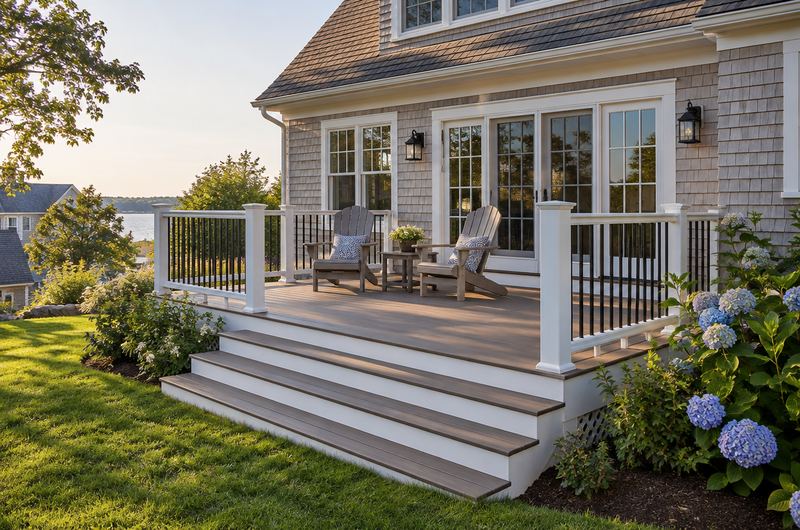
Why homeowners here switch to composite
- The staining season in Rhode Island is short, and composite takes it off the calendar
- Capped boards resist moisture, mildew staining and fading
- No splinters for bare feet and no popped nail heads
- Color and grain options that read as real wood from the yard
- Manufacturer warranties that commonly run 25 years or more
Installed the right way
Composite is less forgiving of shortcuts than wood. Joists have to be flat and spaced to the manufacturer's requirements, usually 16 inches on center for straight runs and 12 for diagonals and stairs. Boards expand and contract with temperature, so gapping changes with the day's weather. We use hidden fasteners for a clean surface, picture-frame borders to cover cut ends, and joist tape to protect the frame that now has to last as long as the decking.
Composite in winter
Use a plastic shovel that runs with the boards, and choose calcium chloride or another ice melt the decking manufacturer approves. Rinse off salt residue in spring. That is most of the maintenance, aside from an occasional wash with soap and water.
Frequently asked questions
Can composite decking be installed over my existing deck frame?
Yes, if the frame is sound, flat and spaced correctly. We inspect it first and add joists or blocking where the product requires. A frame with rot or a failing ledger should be rebuilt instead.
Does composite decking get hot?
Darker boards in full sun get warmer than wood. Lighter colors and newer heat-mitigating lines stay more comfortable, and we can show you samples to compare on a sunny day.
Is composite worth the extra cost?
Over 15 to 20 years, the money not spent on washing, stripping and staining closes most of the gap with wood, and you keep the weekends. It is the better value for owners who plan to stay in the home.
Related services
Where we work
We provide composite deck installation in Providence, Cranston, Warwick, Pawtucket, East Providence, Woonsocket, Cumberland, Coventry and the rest of our Rhode Island service area.
Last updated November 21, 2026